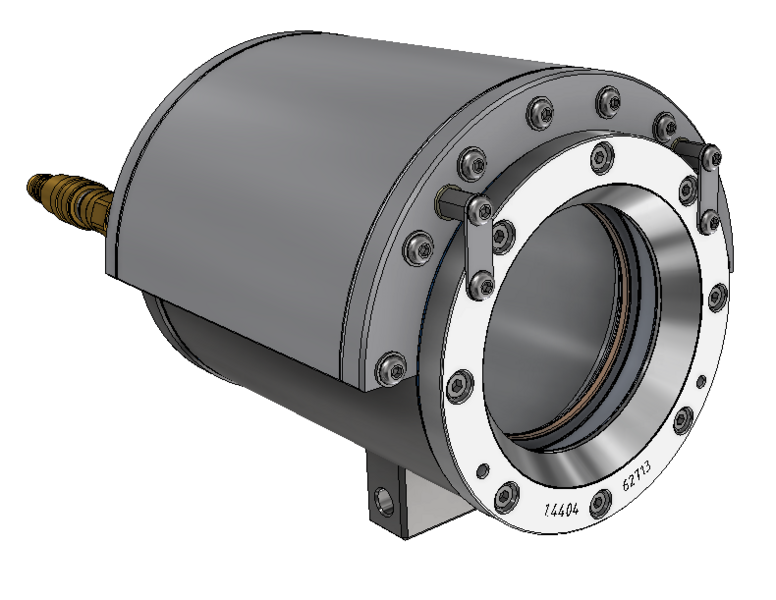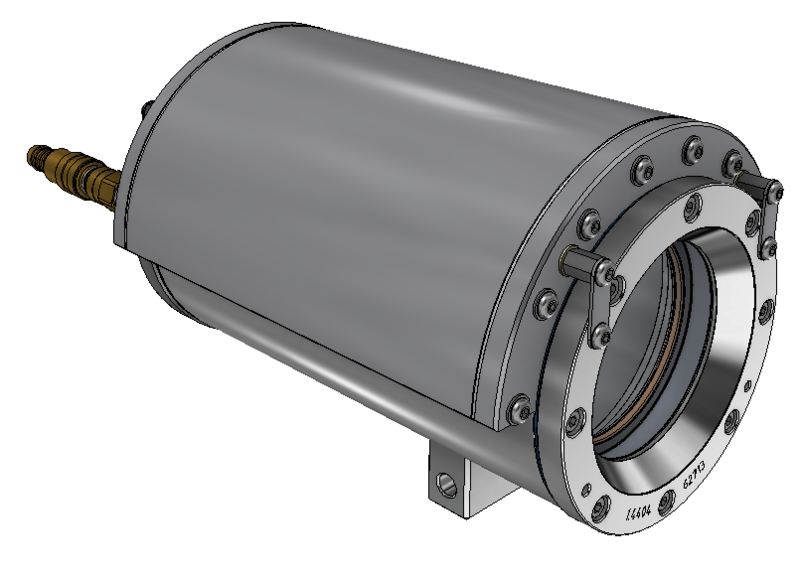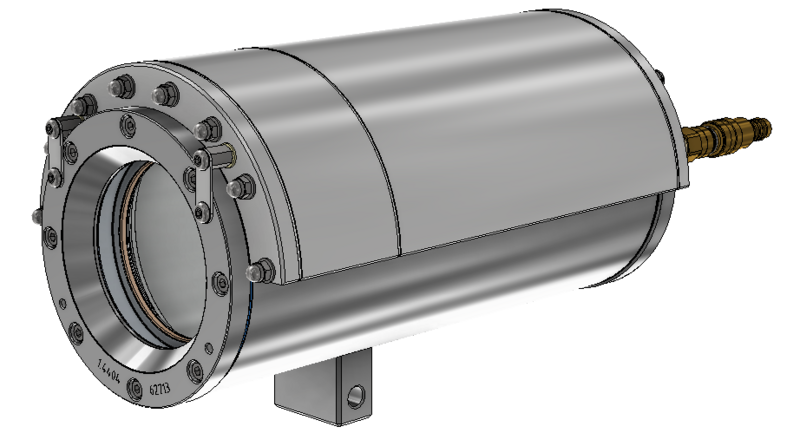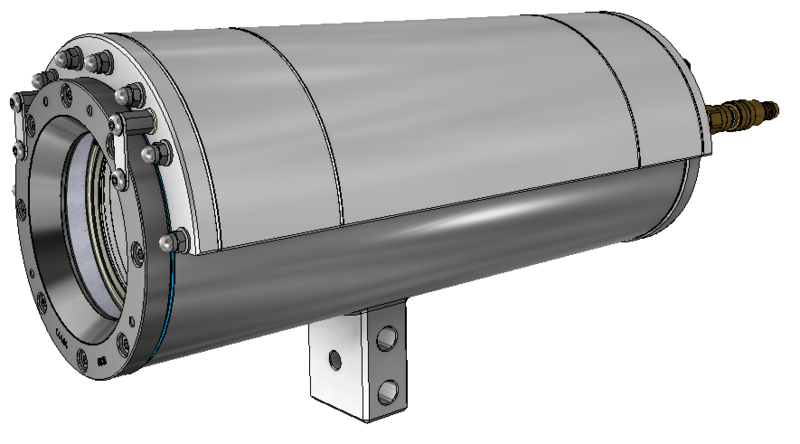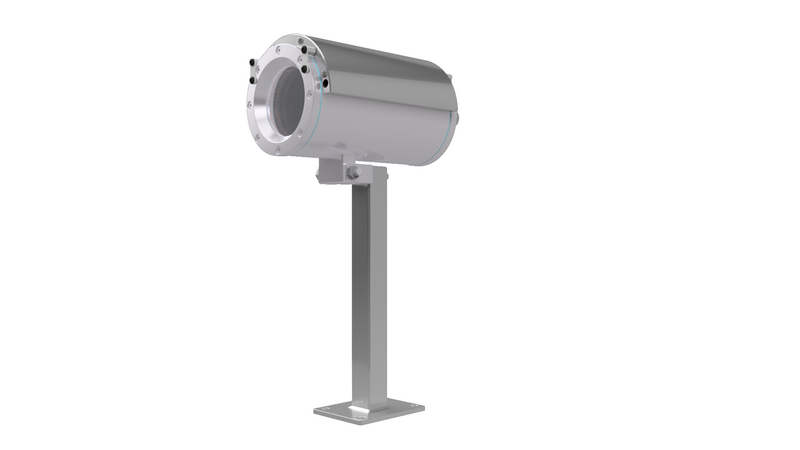

What is the cool.Jacket 2.0?
The cool.Jacket 2.0 is an active cooling system for our explosion-proof cameras that works on the basis of heat exchange and is mounted onto the applicable camera.
In order to allow the cool.Jacket 2.0 to effectively transfer the temperature of the camera housing to the cooling agent, it disposes of meander shaped through holes so that the active cooling system of the cool.Jacket can cool down the camera housing to approx. 35°C to protect the electronical components of the camera module when the ambient temperature is 90°C.
Can I use cool.Jacket 2.0 in hazardous area?
Yes. The cool.Jacket was developed as an accessory component for our ExCam series.
What is so special about cool.Jacket 2.0?
The cool.Jacket is not a cooled housing, but rather a cooled housing accessory, making it extremely versatile. It is also much more compact than conventional actively cooled camera housings.
However, its most important feature is the decoupling of the cooling system (cool.Jacket 2.0) from the pressure-resistant encapsulated camera housing responsible for explosion protection: Regardless of the condition of the cool.Jacket, explosion protection is always guaranteed!
Does the supply line, i.e. the cable to the camera, also need to be cooled?
The permissible temperature range of the supply cable must be observed. Our SKD05-HT high-temperature cable can be used in ambient temperatures of up to +150°C.
Is the use of explosion-proof cameras permitted at high temperatures, and what needs to be considered when using them in such cases?
In general, yes, but the temperature class must be taken into account. If a system requires temperature class T5, for example, the camera must not exceed 100°C. However, if the ambient temperature is already 70°C, this is no easy task for a camera system.
Do I also need to active cooling in the hazardous area if I only expect high ambient temperatures for a short period of time?
That depends on the height of the temperature peaks. Generally speaking, a distinction is made between a functional temperature range and an Ex temperature range. Details can be found in the operating instructions for our cameras. The ExCam IPQ1656, for example, should only be used at a maximum temperature of +60°C according to functional criteria. So if you want to use the camera at +60°C and expect short-term temperature peaks of +65°C, you do not need a cool.Jacket. However, if the temperature is permanently +70°C, then the use of the cool.Jacket is necessary.
Why can't I use a normal camera continuously at higher temperatures?
Normal (explosion-proof) cameras have a much smaller temperature range within which they can be used than regular cameras for safe areas. Usually, the maximum operating range for cameras is around 40°C.
The reason for this is that IP cameras themselves emit heat (camera module, CPU, etc.) and this heat cannot be dissipated due to the explosion-proof housing. Conditions inside a camera are therefore similar to those in a sauna. Continuous operation puts too much strain on the material, causing it to lose functionality and usually requiring replacement well before the end of the warranty period.
The cool.Jacket 2.0 cools the camera housing to a low temperature and extends its service life.
What conditions do I need on site?
The cool.Jacket 2.0 must be connected to a cooling system. In the simplest case, this cooling system consists of a circulating cooling unit connected to the cool.Jacket via a heat-insulated pipe. This is usually placed in a colder environment outside the explosion-proof area. We are happy to assist you with planning and implementation.
Is cool.Jacket 2.0 suitable for continuous use, or can it only be used for temporary cooling?
The cool.Jacket 2.0 is designed for continuous use. If you only want to compensate for high temperatures temporarily, the system can be equipped with a solenoid valve in the cooling system, which in turn allows the cool.Jacket to be regulated accordingly. We would be happy to advise you on this in order to implement the best solution for you.
What alternatives to cool.Jacket 2.0 are available from other manufacturers?
Instead of a cool.Jacket, an explosion-proof camera can also be installed in a cooled, non-explosion-proof housing. However, this solution has three serious disadvantages:
1.) Housing size: : These housings are usually very large, which can be disruptive depending on the conditions on site.
2.) Cooling system failures: If the cooling system fails, explosion protection is no longer guaranteed and the entire system must be shut down and disconnected from the power supply.
3.) Expensive and maintenance-intensive implementation: A redundant safety system with temperature sensors and power cut-off must be installed to disconnect the entire system from the power supply in the event of a failure.
The cool.Jacket, on the other hand, is relatively small and inexpensive due to its design, and explosion protection is still guaranteed even if the cooling system fails.
What if the cooling system fails?
If the cooling system fails, the temperature of the camera CPU rises and sooner or later stream interruptions occur and mechanical components fail. Eventually, the camera will die of “heat death.”
However, all of these are merely functional consequences of the failed cooling system: even if the cooling system fails, your camera will always remain explosion-proof! Explosion protection is always independent of the function of the cool.Jacket.
What is the maximum temperature allowed in my environment?
In hazardous areas, the camera may be installed in locations where the maximum temperature does not exceed 120°C.
What types of cooling are there?
- Simple water cooling system: Connect to a water pipe; the heated water is then fed into the water disposal system
- Active water cooling system: Do you already have a water cooling system with a recirculation circuit on site? Perfect, then cool.Jacket can be connected directly to it
Can cameras also be used in combination with a sight glass?
Yes, this is a typical application.
Do I need to install my own temperature sensors?
No.
Can I use it to cool for example a Bosch, Pelco or Olarco camera?
The cool.Jacket 2.0 fits snugly around the housings of the ExCam series. Cameras from Bosch, Pelco or Olarco cannot be cooled with it. If you want to cool an existing camera, you will need to use an additional housing (see answer “What alternatives to cool.Jacket are available from other manufacturers?”). In practice, however, the use of cool.Jacket makes more sense and is also attractively priced.
Questions about our product?
If you have any questions about our product please contact our Sales Team.
We are happy to assist you with planning and implementation.