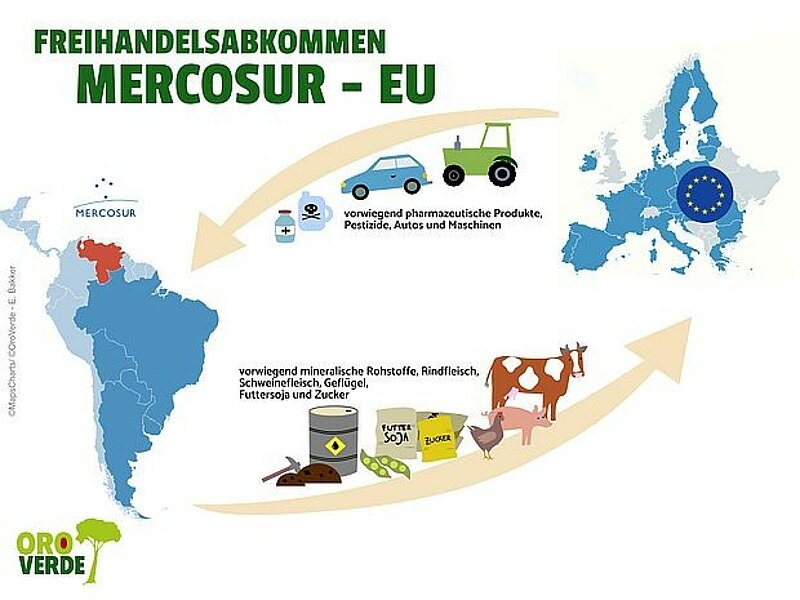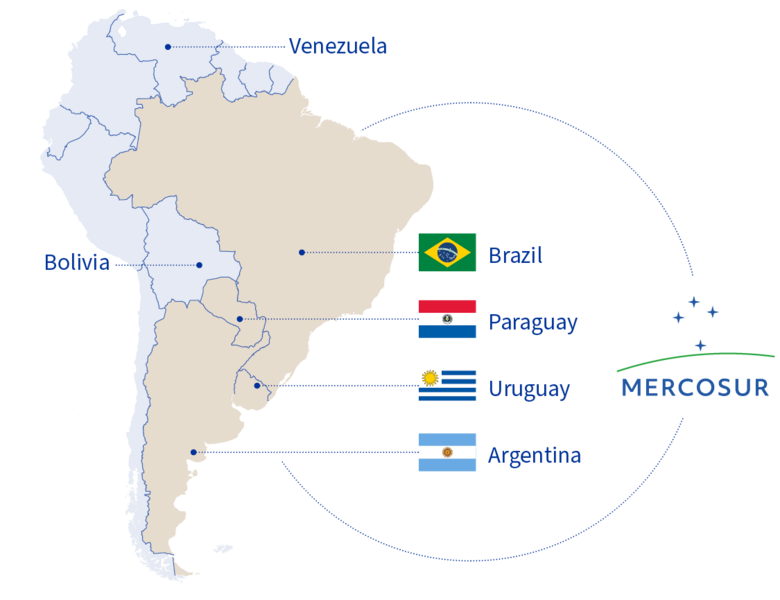
After 25 years of negotiations, the free trade agreement between the EU and the MERCOSUR countries (“Mercado Común del Sur - Southern Common Market”): Brazil, Argentina, Paraguay, and Uruguay was signed on January 17, 2026.
The agreement still has to be reviewed by the European Court of Justice (ECJ), but the EU Commission decided to bring it into force (February 2026) despite the legal review.
Important facts:
- Competitiveness: Economic advantages through the removal of trade barriers for export goods, free movement of goods, services, and production factors between member states – access to markets – growth, innovation, and employment, access to services and public tenders
- Acceleration of customs clearance, reduction of tariffs on industrial and agricultural products, regulatory hurdles remain – SPS regulations, technical standards, and certifications continue to apply
- Advantages for the mechanical engineering, chemical/pharmaceutical, and automotive industries – independence from other markets in terms of raw material supplies (e.g., China), new sales and procurement markets (critical raw materials – lithium, copper, graphite)
- Impetus for growth, innovation, and employment – investment location for renewable energies, partnership agreements as a sign of rules-based international cooperation, rules and obligations regarding the origin of goods, environmental and social standards (protected designations of origin)
Mr. Seibert, what does the MERCOSUR agreement mean for SAMCON?
- Given the current economic situation, we are glad to have partners with whom we have reliable free trade agreements.
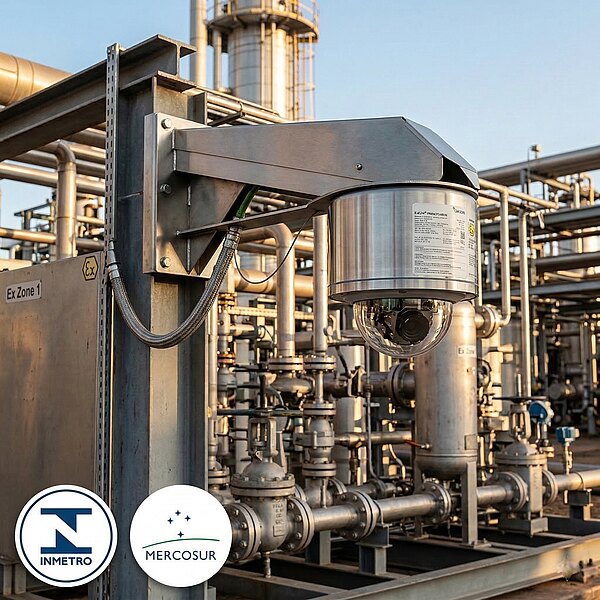
The hazardous area is a legally regulated area. This is not only regulated in the EU—ATEX directives, for example—but also in the Russian Customs Union and in South American countries such as Brazil, where there are certification requirements — INMETRO certification. - SAMCON is already very well positioned in this area. SAMCON has INMETRO certification for both the ExCam series and the ConnectionRail series.
Which market is potentially interesting for SAMCON?
- Generally, these are the markets we already serve today—oil and gas, but also green hydrogen, all potentially explosive areas of application where monitoring is required.
In Brazil, we already have a network of (semi-public) companies that use our product range. This trade will be significantly simplified under the MERCOSUR agreement.
How can one imagine this?
- The MERCOSUR agreement enables us to integrate SAMCON device technology into planning tasks.
We offer connection systems that are compatible with our camera systems: cables and wires, fiber optic cables and fiber optic splice boxes for integration into existing infrastructures. - The time required to ensure technical certification and manage export regulations—from planning to device/system production—will be significantly reduced in the future.
Interview with Mr. Steffen Seibert, Managing Director of SAMCON Prozessleittechnik GmbH